
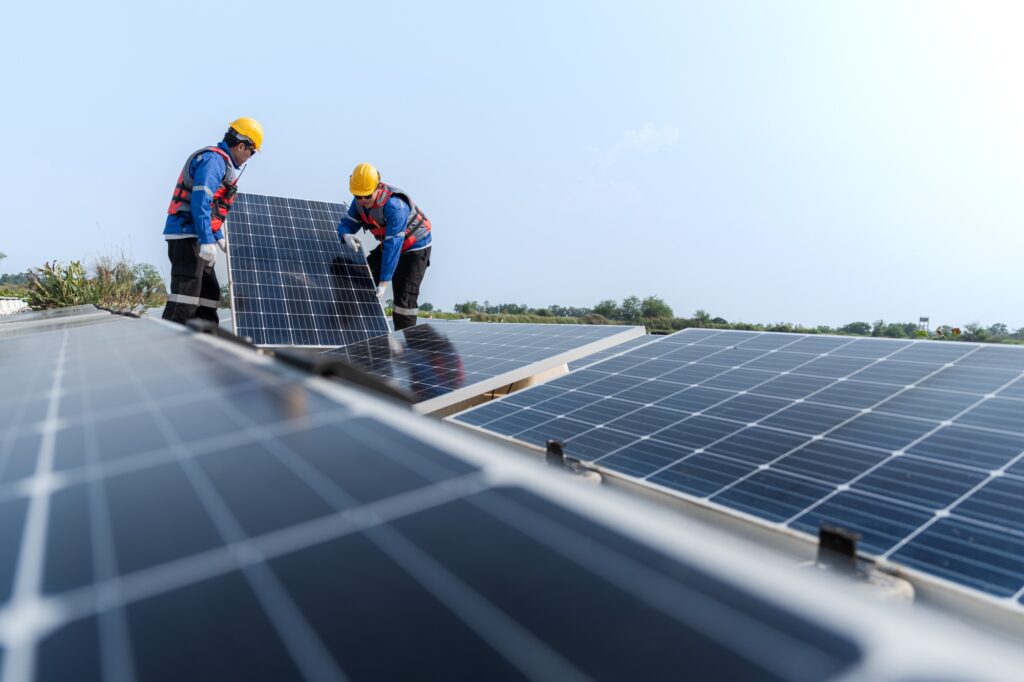
UK businesses are facing unprecedented energy costs, with electricity prices continuing to rise and pressure mounting on operational budgets. For companies looking to reduce overheads while embracing sustainability, commercial solar PV presents an attractive solution. By installing commercial solar panels, businesses can generate their own electricity, significantly cutting reliance on the grid and lowering energy bills. These systems not only provide long-term financial benefits but also contribute to corporate sustainability goals, making them a smart investment for both the environment and the bottom line.
What is Solar PV and How It Works for Businesses
Solar PV, or photovoltaic technology, converts sunlight directly into electricity. For commercial properties, solar panels are typically installed on rooftops or other available roof space, where they absorb sunlight and generate energy to power business operations. The electricity generated can either be used immediately, stored in battery systems for later use, or exported back to the grid under certain schemes, allowing businesses to maximise their savings.
Key Components of a Commercial Solar System
A commercial solar panel system is made up of several key components:
- Solar panels: Capture sunlight and convert it into electrical energy.
- Inverters: Convert the direct current (DC) generated by panels into alternating current (AC) suitable for business use.
- Mounting systems: Secure panels to rooftops or other structures, optimising orientation and tilt for maximum sun exposure.
- Optional battery/storage: Stores surplus energy for use during evenings, cloudy days, or peak demand periods, increasing self-consumption and reducing grid reliance.
Each component is designed to ensure efficiency, durability, and ease of integration with existing electrical infrastructure.
Lifespan and Efficiency
Commercial solar systems in the UK are built for longevity, typically offering 25 to 30 years of reliable service. Efficiency may gradually decrease over time, with modern panels retaining 80 to 90 percent of their original output even after two decades. High-quality commercial solar panels are engineered to withstand UK weather conditions, providing consistent performance through seasonal changes, from sun hours in summer to overcast winter days.
Why Solar Works Well for Businesses
Commercial solar is particularly effective for businesses due to several factors:
- Day-time electricity usage: Businesses often consume most of their energy during daylight hours, which aligns perfectly with solar generation.
- Ample roof space: Commercial properties usually have large, unobstructed rooftops ideal for solar panel installation, allowing scalable systems to match energy demands.
- Scalability: Systems can be designed to meet current consumption with the flexibility to expand as the business grows or energy needs increase.
Contact SKCG Renewable today to learn more about commercial solar solutions and schedule a consultation. Start reducing your energy bills while contributing to a greener future.
Why UK Businesses Are Turning to Solar: Benefits and Savings
In recent years, commercial solar panels have become an increasingly popular choice for UK businesses looking to reduce costs and operate more sustainably. Rising energy prices, the desire for greater energy independence, and corporate responsibility initiatives are driving this shift. Solar PV systems allow businesses to generate their own electricity, offering both financial and environmental benefits. From lowering energy bills to enhancing green credentials, investing in solar energy provides a strategic advantage for companies of all sizes.
Reduction in Electricity Bills
One of the most immediate benefits of installing commercial solar panels is the reduction in electricity bills. By generating your own solar energy on-site, businesses can significantly decrease reliance on grid electricity. This is particularly advantageous for companies with high daytime energy consumption, as solar PV systems produce the most electricity during peak hours. Over time, these savings can offset installation costs, making solar energy a highly cost-effective solution for both SMEs and larger enterprises.
Energy Independence and Price Protection
Solar PV also provides energy independence, helping businesses protect themselves from volatile grid prices. Electricity costs in the UK can fluctuate due to supply constraints or changes in wholesale energy markets. By generating power on-site, companies reduce exposure to these uncertainties. Energy independence not only improves budget predictability but also strengthens operational resilience, ensuring that essential equipment and systems remain powered even during periods of high demand or price spikes.
Long-Term Savings and Return on Investment
Beyond immediate bill reductions, commercial solar panels offer long-term financial advantages. Many UK businesses find that solar PV systems deliver a strong return on investment, with typical payback periods ranging between five to ten years depending on system size and energy usage. After the system pays for itself, all additional energy generated effectively becomes a cost saving. For businesses planning growth or expansion, this predictable long-term benefit makes solar energy a highly attractive investment.
Environmental and Sustainability Benefits
Sustainability is another driving factor behind solar adoption. By producing clean, renewable energy, UK businesses can significantly lower their carbon footprint. This aligns with environmental, social, and governance (ESG) goals and enhances a company’s reputation among clients, investors, and employees. Investing in solar energy demonstrates a tangible commitment to reducing environmental impact and contributes to broader national and global targets for carbon reduction.
Financial Incentives and Business Case for Investment
For UK businesses, investing in renewable energy is more than an environmental initiative—it is a strategic financial decision. Commercial solar PV systems provide opportunities to reduce energy bills, generate additional income, and leverage government-backed incentives.
Tax Reliefs and Capital Allowances
UK businesses can benefit from a range of tax reliefs when installing solar PV panels. These incentives reduce upfront costs and shorten payback periods, making the investment more financially viable.
- Full expensing and capital allowances allow businesses to offset solar PV installation costs against taxable profits in the same financial year.
- Annual Investment Allowance (AIA) enables SMEs to claim the cost of qualifying renewable energy assets, further lowering taxable income.
- These measures significantly reduce the financial burden of panel installation while supporting long-term energy savings.
Revenue from Surplus Energy
One of the major advantages of commercial solar is the ability to generate revenue from surplus electricity.
- Businesses can participate in schemes like the Smart Export Guarantee (SEG) to sell excess electricity back to the grid.
- Combining solar PV panels with battery storage enhances flexibility, allowing stored energy to be used during peak demand or exported when prices are higher.
- Revenue from surplus energy helps shorten the payback period and improves overall return on investment, making solar a compelling choice for SMEs.
Shorter Payback Periods and Strong ROI
Solar panel installation provides immediate cost benefits and long-term savings:
- Self-generated electricity reduces reliance on the grid, lowering operational costs.
- Rising electricity prices increase the value of energy produced by PV panels.
- Tax reliefs, allowances, and revenue from exports combine to deliver a faster payback period and stronger return on investment.
Strategic Panel Installation
Proper planning of PV panel installation is essential to maximise energy and financial outcomes:
- Assess roof space, orientation, and shading to ensure optimal energy production.
- Align system size with current and projected energy consumption to future-proof the investment.
- Integrating battery storage ensures businesses can manage energy efficiently and export surplus when profitable.
Key Considerations Before Installing Solar PV for Your Business
Installing solar PV for your business is a strategic step toward sustainability, cost savings, and long-term energy independence. However, achieving a successful and cost-effective installation requires careful evaluation of your business’s energy needs, site conditions, and financial considerations.
Suitable Business Profiles
Not every business will benefit equally from a solar PV installation. The most suitable candidates are those with significant daytime energy consumption, as solar panels generate electricity primarily during daylight hours. Other important considerations include:
- Available roof or ground space: Sufficient, unobstructed areas allow for more panels and higher energy output.
- Load profile alignment: Understanding when your business uses energy versus when solar panels generate it ensures the system meets a meaningful portion of demand.
- Operational consistency: Businesses with predictable operating hours and energy usage patterns will see the greatest financial and environmental benefit.
Upfront Costs and Scale
Costs for solar PV installations vary depending on the system size and complexity. Small to medium installations may cost less upfront but cover only a portion of your energy demand, while larger systems require higher initial investment yet offer substantial long-term savings. Key points to consider include:
- System size versus energy coverage: Larger systems provide more energy and higher potential savings, but require more space and capital.
- Budget planning: Understanding cost ranges helps determine a feasible installation while maintaining ROI expectations.
- Government incentives: Available grants and schemes can reduce upfront costs and improve payback timelines.
Factoring in these elements ensures that your business selects a system size that balances cost, performance, and long-term financial benefits.
Planning, Installation Logistics, and Maintenance
Choosing a reputable installer is essential to ensure smooth planning and installation. Consider the following:
- Verify the installer’s credentials, experience, and customer reviews.
- Discuss warranties and post-installation support.
- Plan installation to minimise disruption to business operations.
- Ensure compliance with local regulations and planning permissions.
Ongoing maintenance is typically straightforward but critical to preserving performance. Regular inspections, cleaning panels, and monitoring energy output help guarantee the system continues to deliver as expected.
Realistic Expectations
It is important to set realistic goals for solar PV coverage and savings. Depending on your sector and operational hours, solar may only cover a portion of daytime electricity usage. Other points to consider:
- Sector-specific usage: Industrial, retail, or office businesses may see varying savings depending on energy patterns.
- Long-term benefits: Reduced energy costs, increased energy independence, and lower carbon footprint.
- Payback horizon: While financial returns may take several years, the system continues to provide energy and savings well beyond initial payback.
A well-planned solar PV installation helps your business cut energy costs, increase energy independence, and take full advantage of government incentives. By carefully assessing your business profile, energy use, and installation requirements, you can implement a sustainable, future-ready energy solution that delivers both financial and environmental benefits.
Expert Solar PV Solutions for UK Businesses
Solar PV installations can transform how your business consumes and manages electricity. SKCG Renewable provides expert renewable energy solutions that help businesses cut energy costs, achieve energy independence, and leverage government incentives. We evaluate roof space, operational energy patterns, and optimal system size to create a solution that maximises efficiency and return on investment. With professional installation and ongoing support from SKCG Electrical, your business can enjoy reliable, sustainable energy while preparing for the future.
Contact 0203 968 68 69, email info@skcg-renewable-energy.co.uk, or visit skcg-renewable-energy.co.uk to discuss a customised solar PV plan.